Executive Summary: Moving heavy boxes and furniture yourself can easily lead to muscle strains, falls or worse if you’re not prepared. This guide gives evidence-based tips on safe lifting biomechanics, packing/load sequencing, and a quick self-screen checklist to spot risk factors. We also highlight red-flag symptoms (when to stop and get help) and outline when hiring professional movers is safer or even legally advisable. Finally, a table compares DIY vs professional moving by injury risk, cost, time and insurance, and a flowchart helps decide the best approach.
Common Risks and Pre-Move Self-Screen
Most moving injuries are musculoskeletal (e.g. back, shoulder, knee strains) caused by improper lifting, twisting or overexertion. Ontario workers’ data show the lower back is most often hurt, followed by shoulders and neck. Before you start, do a quick self-check: age or health issues (recent injuries, hernias, pregnancy, high blood pressure), fitness level, or current pain increase your risk. If you have chronic back pain, joint conditions, heart issues or bone weaknesses, reconsider heavy lifting or get help. Even feeling unusually sore or exhausted in the day or two before the move is a warning.
Also inspect the environment: clear paths of clutter, salt icy steps, tape down loose carpets and remove obstacles. Uneven or slippery floors greatly raise trip/fall risk. Check box weights: a box should not exceed your safe lift limit (around 20–23 kg/50 lb under ideal conditions). Finally, set realistic limits: plan frequent breaks and stay hydrated – fatigue and dehydration can force poor posture and muscle strain. (If any warning sign occurs—severe pain, numbness or dizziness—stop immediately and get medical care.)
Safe Lifting and Handling Techniques
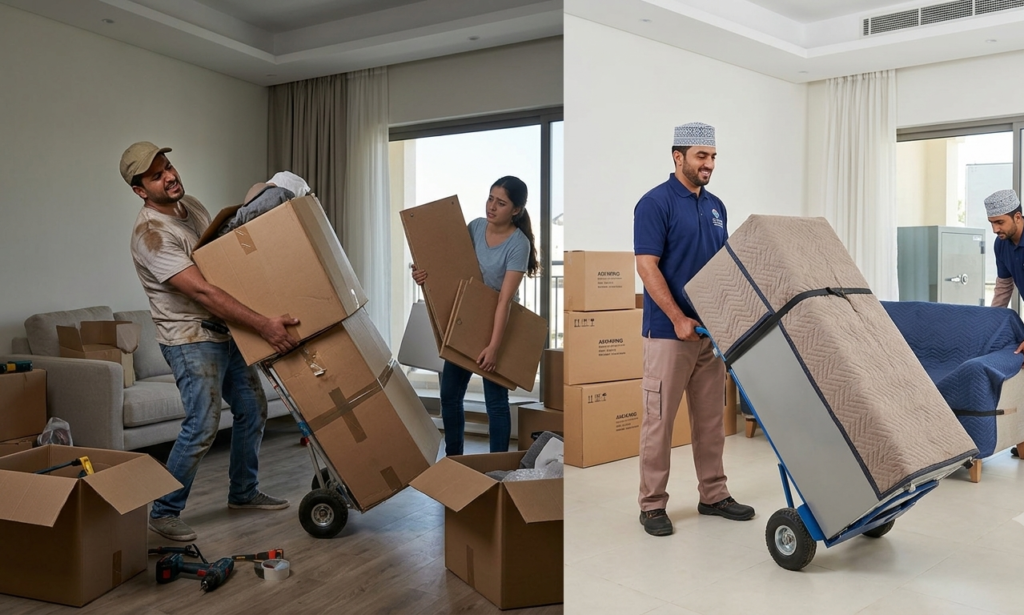
Use proper lifting biomechanics on every lift. The basic rule is to keep your spine neutral and use leg power, not your back. Follow these steps every time you pick up a heavy item:
· Stand close with feet shoulder-width apart (hug the object), so it stays near your centre of gravity.
· Keep an upright posture and maintain the natural curve in your lower back while you squat. Engage your core (tighten stomach muscles) to stabilize the spine.
· Lift with legs, not back: Push up through your heels using your thighs. Your legs are far stronger than your lower back.
· Pivot instead of twisting: To change direction, turn your feet first. The back should not twist under load.
Also grip items securely (poor grip leads to slips) and avoid rushing or jerking. When setting things down, squat with knees bent rather than bending at the waist. If an object is too heavy or awkward to lift safely alone (especially anything above ~25 kg or requiring you to lift above shoulder height), ask for help or use equipment (dolly, hand truck, straps). It’s better to plan a team lift – for example, do not hesitate to recruit a second person for any load above 60 lb (~27 kg).
Packing, Load Sequencing and DIY Tools
How you pack and load greatly affects injury risk. Distribute weight evenly in boxes to avoid one-sided strain. Put heavy items on the bottom of boxes and use smaller boxes for heavy loads (stacking books in a large box can overload it). Label very heavy boxes with “Heavy” so you know multiple people may be needed. Pack systematically: start with non-essentials, then everyday items, leaving the essentials for last to avoid last-minute rushing.
When loading the vehicle or moving items through tight spaces, clear and organise: create a packed path so you minimize back-and-forth trips and bending. For example, load bulky or heavy furniture first in the truck so lighter items go around it, reducing the number of times you must strain to reach far or awkward corners. Carry boxes at waist level; bending repeatedly for low or high loads is injurious. If you feel the load shifting or uneven, readjust immediately.
You can also improvise safe tools using household items:
· Furniture sliders or thick cloths: Wrap blankets, towels or even old t-shirts under heavy furniture legs to slide objects smoothly on hardwood or tile floors. This avoids dragging and jerking.
· Straps or luggage: Use a sturdy scarf, tie-down strap or a rope looped under a tall item to give two people a better handle and leverage for lifting.
· Dollies and suitcases: A hand truck (dolly) is ideal, but if you have a sturdy suitcase with wheels or a large bucket on rollers, use that for books or small appliances.
· Fulcrum (lever) trick: For very heavy items, slide a sturdy long board or broom handle under it at an angle to lift one side up slightly, then creep along and keep lifting – this changes the leverage but be careful not to pinch fingers.
Always lift (or start moving) in a smooth, controlled way – jerking or sudden moves spike risk. Wear appropriate clothing (avoid belts or garments that could catch) and sturdy closed-toe shoes with good traction to prevent foot injuries and slips. Gloves that improve grip can help as well.
Warning Signs: When to Stop and Seek Help
Certain symptoms or scenarios are red flags that signal you should stop immediately and seek professional help (medical or otherwise). These include:
· Sharp or Radiating Pain: If you feel a sudden, sharp shooting pain in your back, shoulder or neck, especially if it radiates down an arm or leg (signs of nerve compression). Do not ignore numbness, tingling or weakness in a limb. These may indicate a serious back/spine or herniated disc injury.
· Joint “Pop” or Swelling: Any acute injury that causes a joint to pop, lock up or visibly swell could be a sprain or fracture. Stop moving, apply ice and get medical evaluation.
· Severe Exhaustion or Dizziness: Feeling dizzy, confused, or extremely fatigued (more than just normal tiredness) can mean you’re dehydrated or in a dangerous health state. Take a break or call it off.
· Heart Symptoms: Unusual chest pain or shortness of breath during strenuous lifts should never be ignored – call emergency services immediately.
If an accident involves another party (for example, a hired mover slips or damages property), document it and consider getting legal advice. In Ontario, only the moving workers would be covered by WSIB (see below) – volunteers and homeowners are personally on the hook. For serious injuries or property damage involving others, you may need legal counsel. In such cases, consider contacting a Collingwood personal injury lawyer for guidance on your rights and next steps. (For example, if negligence by a mover caused injury, a lawyer can explain liability laws.)
When to Hire Professional Movers
Even with all precautions, some moves exceed DIY safety. Call professional movers when risk factors are high or your capacity is limited. Consider hiring pros if you have:
· Very Heavy or Bulky Items: If you own large safe, piano, hot tub, gas appliances or bulky furniture, professionals have the equipment and training to move these safely (especially with stairs).
· High Volume or Multiple Floors: A whole-house move (many furniture pieces, appliances, full truckload) or moving up/down multiple flights of stairs dramatically increases fatigue and falls.
· Health or Time Constraints: If you or anyone helping has health issues, or if you must complete the move very quickly, pros can reduce strain.
· Inexperience: First-time movers may not know the pitfalls. Professional crews are trained in safe lifting and packing, and often work faster.
· Cold/Hot Weather or Risky Conditions: Extreme weather (icy steps, very hot humidity) ups the danger. If heavy lifting in these conditions, consider calling experts.
Below is a quick comparison of DIY vs. professional moves in Ontario:
| Aspect | DIY Move | Professional Move |
| Injury Risk | Higher. Novices often lift improperly and lack safety gear. No WSIB protection if someone (friend) is hurt. | Lower. Trained movers use safe techniques and equipment. They carry WSIB coverage for their staff. |
| Cost | Lower up front. Only truck/gear rental and fuel. Hidden costs: potential medical bills or replacement of damaged items. | Higher up front. Labor and moving fees apply. Insurance and WSIB costs are built in, but reduces risk of unexpected losses. |
| Time | Slower. Fewer hands and experience means longer move. | Faster. Crews work efficiently and often finish in a fraction of the time. |
| Legal/Insurance | Limited coverage. Homeowner’s insurance often excludes “in-transit” damage. No worker’s comp if helpers are volunteers – they would have to claim on your home policy or sue. | Covered. Movers must offer WSIB compliance and liability insurance. Proper valuation insurance is available for your belongings. |
Decision Flowchart
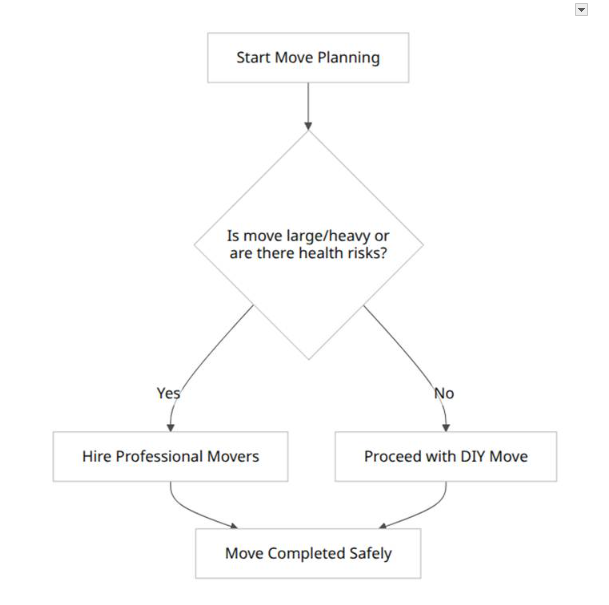
This simple flow shows that if multiple risk factors exist (e.g. heavy items, health issues), hiring professionals is the safer path.
Legal and Insurance Notes
In Ontario, moving companies must comply with WSIB (the workplace insurance) to protect workers. If you hire a certified mover, any work-related injury to them is covered by WSIB (you won’t be sued). In contrast, if uninsured helpers (friends or unscrupulous movers) are injured, they can sue you or your home insurer and standard home insurance often won’t cover injuries from physical work. Indeed, even if you help and hurt yourself, WSIB won’t pay you – “you are on your own”.
For your belongings, note that Ontario law requires movers to provide at least minimal coverage (released value at $0.60 per pound per item). Homeowner insurance usually has narrow “in transit” coverage (typically only fire/theft, not drops). Always ask for a mover’s Certificate of Insurance/WSIB clearance.
Key Takeaway: When moving on your own in Ontario, follow ergonomics basics (neutral spine, legs for power, avoid twisting), pack thoughtfully, and know your limits. Use simple tools (dollies, straps, sliders) and take breaks. If you have any serious risk factors – like heavy loads, health issues, or time crunch – or if injuries/accidents occur, it’s often wiser (and safer) to hire professionals. In any severe case, seek medical attention promptly, and consider contacting a Collingwood personal injury lawyer if legal advice is needed.